 EN
EN

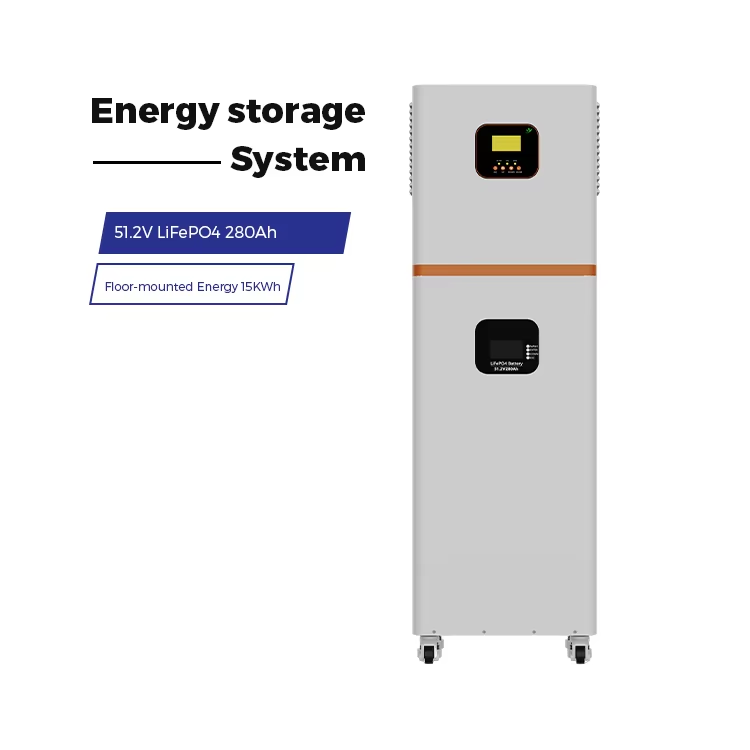
Lithium Iron Phosphate batteries have revolutionized energy storage across residential, commercial, and industrial applications. These advanced power solutions offer exceptional longevity, safety, and performance when properly maintained. Understanding the fundamental care principles for your lifepo4 battery system ensures optimal performance throughout its operational lifetime. Professional maintenance practices can extend battery life significantly beyond standard expectations, making proper care essential for maximizing your investment return. Modern energy storage demands require reliable, long-lasting solutions that deliver consistent power output while maintaining structural integrity under various operating conditions.
Understanding LiFePO4 Battery Chemistry and Characteristics
Core Chemical Composition and Structure
Lithium Iron Phosphate chemistry provides superior thermal stability compared to traditional lithium-ion alternatives. The olivine crystal structure creates robust molecular bonds that resist thermal runaway conditions. This inherent stability makes lifepo4 battery systems exceptionally safe for residential and commercial installations. The phosphate cathode material maintains structural integrity through thousands of charge-discharge cycles. Professional engineers specifically choose this chemistry for applications requiring long-term reliability and safety assurance.
The electrochemical properties of LiFePO4 enable consistent voltage output throughout the discharge curve. Unlike other lithium chemistries, these batteries maintain stable power delivery until near-complete depletion. This characteristic proves invaluable for applications requiring predictable power output. The flat discharge curve eliminates voltage sag issues common in alternative battery technologies. System designers appreciate this predictable performance for critical backup power applications.
Operational Temperature Parameters
Temperature management represents a critical factor in lifepo4 battery longevity and performance optimization. Operating temperatures between 15°C and 25°C provide optimal conditions for maximum cycle life. Extreme temperatures can significantly impact internal resistance and capacity retention. Professional installations incorporate thermal management systems to maintain ideal operating conditions. Monitoring ambient temperature helps predict performance variations and maintenance requirements.
Cold weather conditions can temporarily reduce available capacity without permanent damage. Conversely, excessive heat accelerates chemical reactions that can degrade battery components over time. Understanding these temperature relationships enables proactive management strategies. Environmental controls become essential for installations in extreme climate regions. Proper insulation and ventilation systems protect against temperature-related performance degradation.
Optimal Charging Practices for Maximum Lifespan
Charge Voltage and Current Specifications
Precise voltage control during charging prevents overcharging damage that can shorten battery lifespan significantly. The recommended charging voltage for lifepo4 battery systems typically ranges between 3.6V and 3.65V per cell. Multi-stage charging protocols optimize the charging process while protecting against voltage stress. Professional charging systems incorporate temperature compensation to adjust voltage based on ambient conditions. Avoiding voltage spikes during charging prevents permanent capacity loss and extends operational lifetime.
Current limiting during the charging process prevents excessive heat generation and chemical stress. Most manufacturers recommend charging currents between 0.5C and 1C for optimal balance between charging speed and longevity. Higher charging currents can reduce overall cycle life despite faster charging times. Professional installations use programmable chargers that automatically adjust current based on battery state and temperature. Monitoring charging current helps identify potential system issues before they cause permanent damage.
Depth of Discharge Management
Managing discharge depth significantly impacts the total number of achievable charge-discharge cycles. Shallow discharge cycles can extend lifepo4 battery life to over 6,000 cycles under optimal conditions. Deep discharge events should be limited to preserve long-term capacity retention. Professional energy management systems automatically prevent excessive discharge through programmable cutoff voltages. Regular shallow cycling maintains active material integrity while maximizing operational lifespan.
State of charge monitoring enables precise control over discharge depth and prevents damage from over-discharge conditions. Maintaining charge levels above 20% capacity helps preserve electrode structure and electrolyte stability. Automatic load disconnection systems protect against inadvertent deep discharge events. Battery management systems provide real-time monitoring and control capabilities for optimal performance maintenance. Understanding discharge characteristics enables better system sizing and usage planning.
Environmental Factors Affecting Battery Performance
Humidity and Moisture Control
Controlling environmental humidity prevents corrosion and maintains electrical integrity in lifepo4 battery installations. Excessive moisture can cause terminal corrosion and connection degradation over time. Professional installations incorporate moisture barriers and ventilation systems for optimal environmental control. Sealed battery enclosures protect against humidity infiltration in challenging environments. Regular inspection of environmental seals prevents moisture-related performance issues.
Condensation formation on battery surfaces can create electrical paths that drain stored energy. Maintaining relative humidity below 60% provides optimal conditions for long-term reliability. Dehumidification systems become necessary in high-moisture environments such as coastal regions. Environmental monitoring equipment alerts operators to conditions that could affect battery performance. Proactive moisture control prevents corrosion damage that can permanently impair system function.
Vibration and Mechanical Stress
Minimizing mechanical stress and vibration exposure prevents internal component damage in lifepo4 battery systems. Secure mounting systems eliminate movement that could damage internal connections. Professional installations use vibration dampening materials to protect against mechanical stress. Transportation and handling procedures must minimize shock and vibration exposure. Regular inspection of mounting systems ensures continued mechanical stability.
Internal electrode materials can become damaged by excessive mechanical stress during operation. Proper spacing and support structures prevent cell movement within battery packs. Industrial applications require reinforced mounting systems to withstand operational vibrations. Quality installation practices prevent mechanical failures that could compromise system integrity. Understanding mechanical limits helps specify appropriate installation requirements for specific applications.
Regular Maintenance and Monitoring Procedures
Visual Inspection Protocols
Systematic visual inspection identifies potential issues before they develop into serious problems affecting lifepo4 battery performance. Monthly inspection of terminals, connections, and housing conditions helps maintain optimal system operation. Corrosion, swelling, or discoloration indicates potential problems requiring immediate attention. Professional maintenance schedules incorporate comprehensive visual inspection protocols. Documentation of inspection results helps track system condition over time.
Connection integrity directly affects system performance and safety in battery installations. Loose connections create resistance that generates heat and reduces efficiency. Thermal imaging equipment can identify connection problems before they cause failures. Torque specifications for terminal connections must be maintained according to manufacturer recommendations. Regular tightening of connections prevents performance degradation and safety hazards.
Performance Testing and Capacity Verification
Regular capacity testing verifies that lifepo4 battery systems maintain expected performance levels throughout their operational life. Discharge testing under controlled conditions reveals actual available capacity compared to rated specifications. Professional testing equipment provides accurate measurements of internal resistance and capacity retention. Trending capacity measurements over time helps predict maintenance requirements and replacement timing. Standardized testing protocols ensure consistent and reliable performance verification.
Internal resistance measurements indicate the health of individual cells and overall system condition. Increased resistance typically indicates aging or damage that affects performance and efficiency. Comparative testing between cells helps identify weak components that could affect overall system performance. Advanced battery analyzers provide comprehensive testing capabilities for professional maintenance programs. Regular testing enables proactive replacement of degraded components before system failures occur.
Storage and Seasonal Considerations
Long-term Storage Protocols
Proper storage procedures maintain lifepo4 battery condition during extended periods of non-use. Storing batteries at 50-60% state of charge minimizes capacity loss during storage periods. Temperature-controlled storage environments prevent degradation from extreme temperature exposure. Periodic charging during storage prevents deep discharge conditions that could cause permanent damage. Professional storage facilities maintain optimal conditions for long-term battery preservation.
Self-discharge rates in LiFePO4 chemistry remain relatively low compared to other battery technologies. Monthly capacity checks during storage ensure batteries maintain adequate charge levels. Automated storage systems can provide periodic charging to maintain optimal storage conditions. Documentation of storage conditions helps predict performance after return to service. Understanding storage requirements prevents capacity loss during inactive periods.
Seasonal Performance Variations
Seasonal temperature changes affect lifepo4 battery performance and require adjustments to management strategies. Winter conditions may reduce available capacity while summer heat can accelerate aging processes. Climate-controlled installations minimize seasonal performance variations. Adjusting charge parameters based on seasonal conditions optimizes performance throughout the year. Understanding seasonal effects enables better system planning and capacity management.
Load patterns often vary seasonally, affecting discharge characteristics and cycling frequency. Air conditioning loads in summer create different usage patterns compared to heating loads in winter. Seasonal maintenance schedules should account for changing environmental conditions and usage patterns. Professional energy management systems automatically adjust parameters based on seasonal requirements. Planning for seasonal variations ensures consistent system performance year-round.
Troubleshooting Common Issues
Identifying Performance Degradation
Early identification of performance degradation enables corrective action before serious problems develop in lifepo4 battery systems. Gradual capacity reduction typically indicates normal aging, while sudden changes suggest specific problems. Monitoring systems provide alerts when performance parameters fall outside acceptable ranges. Professional diagnostic procedures help isolate specific causes of performance issues. Understanding normal aging patterns helps distinguish between expected degradation and abnormal conditions.
Voltage imbalances between cells often indicate individual cell degradation or charging system problems. Battery management systems monitor individual cell voltages and provide balancing functions. Persistent voltage differences require investigation to prevent further degradation. Balancing circuits help maintain uniform cell voltages during charging and discharging cycles. Regular monitoring prevents voltage imbalances from affecting overall system performance.
Addressing Safety Concerns
Safety protocols protect personnel and equipment from potential hazards associated with battery systems. Emergency shutdown procedures should be clearly documented and accessible to all operators. Proper personal protective equipment protects technicians during maintenance activities. Fire suppression systems designed for electrical fires provide additional safety protection. Regular safety training ensures proper response to emergency situations.
Thermal monitoring systems provide early warning of potentially dangerous conditions in lifepo4 battery installations. Automatic disconnect systems can isolate batteries from loads when unsafe conditions are detected. Emergency ventilation systems remove potentially hazardous gases during fault conditions. Understanding safety protocols prevents accidents and protects valuable equipment investments. Professional installation practices incorporate multiple safety systems for comprehensive protection.
FAQ
How often should I perform maintenance on my LiFePO4 battery system
Regular maintenance should be performed monthly for visual inspections and quarterly for detailed performance testing. Professional maintenance programs typically include comprehensive annual inspections with capacity verification testing. The frequency may increase for batteries in demanding applications or harsh environments. Monitoring systems can reduce maintenance frequency by providing continuous performance data. Following manufacturer recommendations ensures warranty compliance and optimal performance.
What temperature range provides optimal performance for LiFePO4 batteries
Optimal performance occurs between 15°C and 25°C for most LiFePO4 battery systems. Operating outside this range can reduce available capacity and affect charging efficiency. Extreme temperatures should be avoided to prevent damage and ensure maximum lifespan. Climate control systems help maintain ideal operating conditions in professional installations. Understanding temperature effects enables better system design and management strategies.
Can LiFePO4 batteries be stored for extended periods without damage
LiFePO4 batteries can be stored safely for extended periods when proper procedures are followed. Storage at 50-60% state of charge minimizes capacity loss during inactive periods. Temperature-controlled storage environments prevent degradation from extreme conditions. Periodic charging every 3-6 months maintains optimal storage conditions. Professional storage protocols ensure batteries maintain performance after extended storage periods.
What signs indicate that a LiFePO4 battery needs replacement
Capacity reduction below 80% of rated capacity typically indicates the need for replacement consideration. Significant voltage imbalances between cells suggest internal degradation requiring attention. Physical signs such as swelling, corrosion, or damage indicate immediate replacement needs. Increased internal resistance affects efficiency and may require battery replacement. Professional testing provides accurate assessment of battery condition and replacement timing.